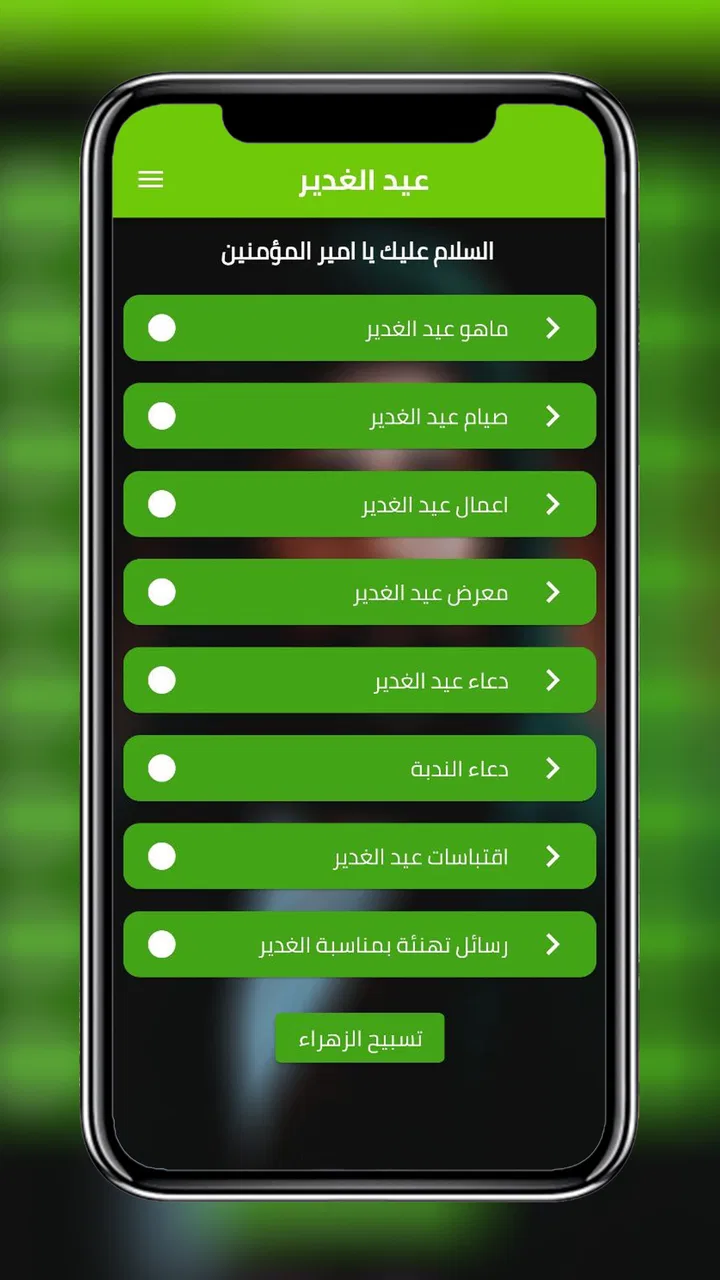
عيد الغدير - عيد الغدير الاغر
- 0.0
- Rating
- 10.00K
- Installs
- Free
- Price

 Analysis by App-foxy
When I first opened عيد الغدير - عيد الغدير الاغر, I treated it less like a general events calendar and more like a focused companion for Eid Al-Ghadeer. That distinction matters. This is a free Android app from Radhwan Faisal, placed in the Events category, with a clear religious focus rather than a broad collection of unrelated celebrations. Its purpose is to gather material connected with Eid Al-Ghadeer in one place, which makes it most useful when I already know what occasion I am preparing for and want a dedicated reference on my phone.
The app has a simple appeal: it concentrates on one important Islamic feast instead of asking me to search through a general-purpose app, social network, browser, or messaging service. I can see why someone would install it before the occasion, keep it available during family visits, or use it as a starting point when preparing personal or community activities. At the same time, a focused app is only valuable if I approach it with the right expectations. It is not a replacement for every religious resource, a full event-management platform, or a universal calendar.
Getting oriented before the first use
The first practical question is whether a phone can run it. The app requires Android 7.0 or later, so I would check the device's Android version before troubleshooting anything else. That one check prevents a common mistake: assuming an installation problem is caused by the app when the operating system is simply too old. The current version is 17, and the application has been available since Jul 12, 2022, so keeping the operating system reasonably current is a sensible first step.
You May Also Like

 Blood Strike: 2.5 Anniversary
Blood Strike’s Loadouts Turn Every Drop Into a Tactical Gamble
A close look at Blood Strike’s custom loadouts: how fast access to signature weapons reshapes its battle royale rhythm, rewards preparation, and narrows the gap between fights.

 Pandora - Music & Podcasts
Pandora’s Music Is Easy to Start, but Harder to Recover
Pandora’s strength is its low-effort path from a seed to a station. Its weak spot is how much confidence it asks you to place in connection, setup, and quiet recovery.

 8 Ball Pool
 Is Built on Rivalries, Rematches, and Routine
A close look at the rivalries, rematches, shared routines, and unanswered safety questions that turn a quick pool match into a persistent mobile community.

 Samsung Music
’s Quiet Strength Is Playing What You Already Own
Its reach comes less from spectacle than from dependable access to a personal library. That simplicity is both the app’s strongest retention engine and its ceiling.

 AccuWeather: Weather Radar
AccuWeather Review: A Quick, Clear Forecast for Everyday Decisions
For everyday plans, the best forecast is the one you can understand quickly. AccuWeather makes rain timing, radar, and local conditions easy to act on, with a few trade-offs.

 Hill Climb Racing
Why Hill Climb Racing Still Turns Crashes Into One More Run
A tiny car, a bumpy hill and one more upgrade: Hill Climb Racing keeps resurfacing because its simple chaos makes every near-miss feel personal.
More From Our News Desk
View All News


I also like to begin with a clear purpose. If I am looking for Eid Al-Ghadeer-related material, the app has a defined reason to be on my device. If I expect a complete Islamic calendar, live community listings, detailed scheduling tools, or a broad library covering every religious occasion, I may be disappointed before I even explore it. The best way to use this app is as a focused Eid Al-Ghadeer resource, not as an all-purpose events manager.
Its Everyone age rating also makes it suitable for a household where different family members may use the same phone. That does not tell me how every item will look or feel in practice, but it does make the app easier to consider for general family access. I would still introduce younger users to the subject rather than handing over the phone without context, because the value here comes from understanding the occasion, not merely tapping through screens.
Because it is free, the decision to try it is relatively easy. There is no purchase calculation to make before testing whether its material fits my needs. Still, free does not automatically mean frictionless. I would reserve a few minutes to open the main areas, understand how the content is arranged, and decide whether it gives me enough practical value for the way I observe or discuss Eid Al-Ghadeer.
Where people may get stuck
The likely point of confusion is not the subject itself but the user's expectation of what “everything related” should mean. A person may install the app hoping for a complete program of local events, reminders, invitations, or a ready-made plan for a gathering. A focused religious app may instead work better as an information and preparation aid. I would therefore explore it before the day of an event, when there is time to decide what information is useful and what still needs to come from another source.
Another possible stumbling block is treating the app as a substitute for communication. If I am organizing a family meeting, I still need a messaging app or a direct conversation to confirm the time and place. If I am attending a public program, I should rely on the organizer for current arrangements. This app can support my preparation, but it should not be assumed to replace the people responsible for a local event.
Language can also shape the experience. The short store description is written in Arabic as “عيد الغدير,” while the app's subject is specifically tied to an Islamic occasion. I would expect the most natural experience to be for users comfortable with the language and religious context surrounding Eid Al-Ghadeer. Someone seeking a heavily translated, comparative, or academic explanation may find a dedicated reference book or a broader educational resource more suitable.
A useful habit is to separate three needs before opening the app: learning, preparing, and sharing. For learning, I would read slowly and note the points I want to revisit. For preparing, I would use any relevant material as a checklist for my own plans. For sharing, I would verify wording and context before forwarding anything to a group. This simple separation reduces the temptation to treat every screen as a finished announcement or authoritative schedule.
Setup checks that save time
My setup routine would be straightforward. I would confirm that the phone runs Android 7.0 or newer, install the app from a trusted app source, and make sure there is enough free storage for a normal installation. If the download pauses, I would first check the internet connection and available space rather than repeatedly tapping the install button. These are ordinary checks, but they solve many problems that users incorrectly attribute to an application.
After opening it, I would give the app a calm first pass instead of immediately searching for one specific item. I would look for the main navigation pattern, identify how the Eid Al-Ghadeer material is grouped, and test whether returning to the previous screen behaves as expected. This is especially helpful with a specialized app because the useful information may be arranged by topic or presentation rather than by the date of a local event.
I would also prepare the phone itself. If I plan to use the app while visiting relatives, I would open it once at home, confirm that the relevant material is easy to reach, and avoid relying on a last-minute setup. If the occasion involves sharing a phone with children or older family members, I would show them the basic route to the content they need. That small rehearsal is more useful than assuming everyone will understand the layout immediately.
When a screen appears empty or takes longer than expected, I would avoid guessing that the content has disappeared. I would close and reopen the app, check the connection if the screen seems dependent on loading, and try again later. I would not change unrelated phone settings or install cleaning tools simply because one page does not behave as expected. General troubleshooting should begin with the least disruptive action.
Notifications deserve a realistic expectation. I would not build an important schedule around a notification unless I have personally confirmed that the app provides and reliably delivers the kind of alert I need. For a family gathering or community program, I would put the time in the phone's normal calendar or keep a written note as a backup. The app's focused subject is useful, but that does not make it a complete reminder system.
A practical workflow for preparation
My preferred workflow begins several days before I need the information. I open the app when I am not rushed, read through the relevant material, and write down the parts that may help with a conversation or gathering. I then decide which questions remain unanswered. For example, the app may help me understand the occasion while the exact meeting location must come from a family member or event organizer.
On the day itself, I would use the app as a quiet reference rather than constantly switching between screens. If a relative asks about the meaning or background of Eid Al-Ghadeer, I can consult the material without turning the conversation into a frantic search. If I am preparing a small family discussion, I can review the content beforehand and choose one or two points that are appropriate for the group. This makes the app part of a thoughtful routine instead of an information dump.
One non-obvious advantage of a dedicated app is reduced distraction. A browser search may lead me into unrelated pages, advertisements, arguments, or material written for a very different audience. A social network may show a mixture of personal posts and unverified claims. With this app, the subject is already narrowed to Eid Al-Ghadeer. That focus can make preparation calmer, particularly for someone who wants a starting point without opening several unrelated services.
There is also a trade-off. Narrow focus means I should not expect the flexibility of a browser or the communication tools of a messaging platform. If I need to compare interpretations, investigate historical sources in depth, or locate a live program in my city, I would use a more specialized alternative alongside this app. I see that as a complementary workflow rather than a failure: one tool helps me orient myself, while another handles a different task.
For sharing, I would avoid copying material without reading it first. I would check whether the wording suits the person receiving it, especially in a mixed group with different levels of familiarity. A short explanation in my own words may be more helpful than forwarding a large block of content. I would also keep the app's role clear: it can support a respectful conversation, but personal guidance from a trusted religious teacher may be better for sensitive or detailed questions.
Recovering when the workflow breaks
If the app will not open, I would begin with a full close and a fresh launch. Next, I would restart the phone and check whether the Android version meets the requirement. If installation failed, I would check storage and connection, then retry through the normal store process. These steps are intentionally basic because they address the most common causes without risking personal data or changing settings unnecessarily.
If the app opens but a particular area does not display as expected, I would move back to the main screen and try the route again. I would also test whether the issue is limited to one page or affects the entire app. That distinction is useful: a general failure points toward the phone, installation, or operating environment, while a single troublesome area may simply require a different navigation path or another attempt.
I would be cautious about clearing app data. It can remove local preferences or reset the experience, so I would treat it as a later step rather than the first solution. Before doing it, I would make a note of anything important I have saved elsewhere. If the problem continues, reinstalling may be reasonable, but I would only do that after confirming that I can set the app up again without losing something I need.
One practical recovery tip is to keep a backup plan for the occasion itself. I might save my own notes, use a regular calendar for times, or keep the relevant contact details in my phone. This is not because the app is unsuitable; it is because a religious gathering should not depend on one mobile screen working perfectly at the exact moment I need it. A backup also lets me troubleshoot patiently instead of making rushed changes.
When the phone or the situation is the real cause
Not every difficulty points to the app. A weak connection can affect downloading or loading, while low storage can interrupt installation. An older device may meet the minimum Android requirement but still feel slow because of its overall condition. In those cases, blaming the application will not solve the underlying problem. I would test another ordinary app or website to see whether the phone is having broader trouble.
Timing can create confusion too. If I am looking for a current local ceremony, the issue may be that the information belongs to an organizer rather than to a dedicated Eid Al-Ghadeer app. If I expected an automatically updated schedule, I may simply be asking this application to perform a job outside its focused purpose. Checking the event directly with the responsible person is more reliable than repeatedly refreshing the app.
There is a similar distinction between information and interpretation. The app may help me begin learning about Eid Al-Ghadeer, but a personal question about belief, practice, or differing viewpoints may need a qualified human answer. I would use the app to prepare better questions, not to pretend that a compact mobile resource can replace every teacher, scholar, or community source.
For users who want a broad events calendar, a standard calendar app is the better choice. For people who need invitations and group discussion, a messaging service will be more practical. For deep research, a carefully selected library or educational reference offers more depth. I would choose this app when the priority is a dedicated, convenient way to keep Eid Al-Ghadeer-related material close at hand.
Who will benefit most
I think it suits users who observe Eid Al-Ghadeer and want a focused resource on an Android phone. It can also help family members who are preparing a conversation, introducing younger relatives to the occasion, or looking for a single place to begin before consulting additional sources. Its free access removes a financial barrier, and its Everyone rating makes it easier to consider for shared household use.
It is less suitable for someone who wants a constantly changing local events feed, advanced planning tools, or a complete religious study platform. I would also hesitate to recommend it as the only resource for a person who needs extensive translation, citations, or detailed scholarly comparison. In those situations, the app may still be a useful first stop, but another resource should carry the main responsibility.
The developer, Radhwan Faisal, has kept the identity of the app closely tied to its subject. That focus is its strongest reason to exist. I would not install it simply because I need another generic events app; I would install it because I want Eid Al-Ghadeer material available in a dedicated form. That is a more honest basis for deciding whether it belongs on my phone.
My practical verdict
After looking at it as a real-use tool rather than merely a store entry, I see عيد الغدير - عيد الغدير الاغر as a focused companion for people who want to prepare around Eid Al-Ghadeer without searching through unrelated services. Its free price, Everyone rating, and support for Android 7.0 or later make trying it straightforward. The current version, 17, also gives users a clear point of reference when checking that they have the intended release installed.
My recommendation is to install it ahead of the occasion, explore it calmly, and pair it with the tools it does not aim to replace. Use a normal calendar for times, direct communication for local arrangements, and trusted human guidance for complex religious questions. If the app's concentrated subject matches what I need, that combination is practical and low-friction.
Ultimately, I would recommend it to a friend who asked for a dedicated Eid Al-Ghadeer resource on Android. I would explain its limitation just as clearly: its value depends on wanting this specific focus. For a broad events planner or a deep research library, I would point elsewhere. For a simple, accessible way to keep material about this important occasion close during preparation and family discussion, this app earns a place as a useful supporting resource rather than a complete replacement for every other tool.
FAQs for عيد الغدير - عيد الغدير الاغر
01What is the main purpose of the عيد الغدير - عيد الغدير الاغر app?
The عيد الغدير - عيد الغدير الاغر app is designed to provide users with comprehensive information and resources related to the celebration of Eid al-Ghadir. It includes historical context, religious significance, and cultural practices associated with this important event in Islamic tradition. Additionally, the app may offer multimedia content such as videos and images to enhance user engagement.
02What features does the app offer to enhance the Eid al-Ghadir experience?
The app offers a variety of features to enhance your Eid al-Ghadir experience, including a detailed calendar of events, prayer guides, and educational articles. Users can also access multimedia content like videos, podcasts, and photo galleries. The app may also include a community forum or discussion board for users to share experiences and insights.
03Is the app available in multiple languages?
Yes, the عيد الغدير - عيد الغدير الاغر app is likely available in multiple languages to cater to a diverse user base. Most religious and cultural apps aim to be inclusive and provide content in several languages, ensuring accessibility for users worldwide. It is recommended to check the app's settings to see the available language options.
04Does the app require an internet connection to function?
The app may require an internet connection for accessing certain features such as streaming videos, downloading content, or participating in community forums. However, it might also offer offline access to some resources like articles and guides, allowing users to continue exploring content even without a stable internet connection.
05Are there any in-app purchases or advertisements within the app?
The app may include in-app purchases or advertisements to support its development and maintenance. These could range from premium content offerings to ad-free experiences. It’s advisable to review the app’s description and user reviews to understand any potential costs or ads before downloading. Always check the app's privacy policy for more details.
Pros
- Comprehensive collection of event details.
- User-friendly interface with smooth navigation.
- Offers audio and visual content for engagement.
- Regular updates with new features and content.
- Available in multiple languages for accessibility.
Cons
- Limited offline functionality.
- Requires constant internet connection.
- Some features may be locked behind paywalls.
- Occasional ads may disrupt user experience.
- Limited customization options for users.

عيد الغدير - عيد الغدير الاغر
Gallery